Memory selection depends on how long information remains useful, rather than treating every remembered fact as permanent prompt content. 32:51 33:17 34:05
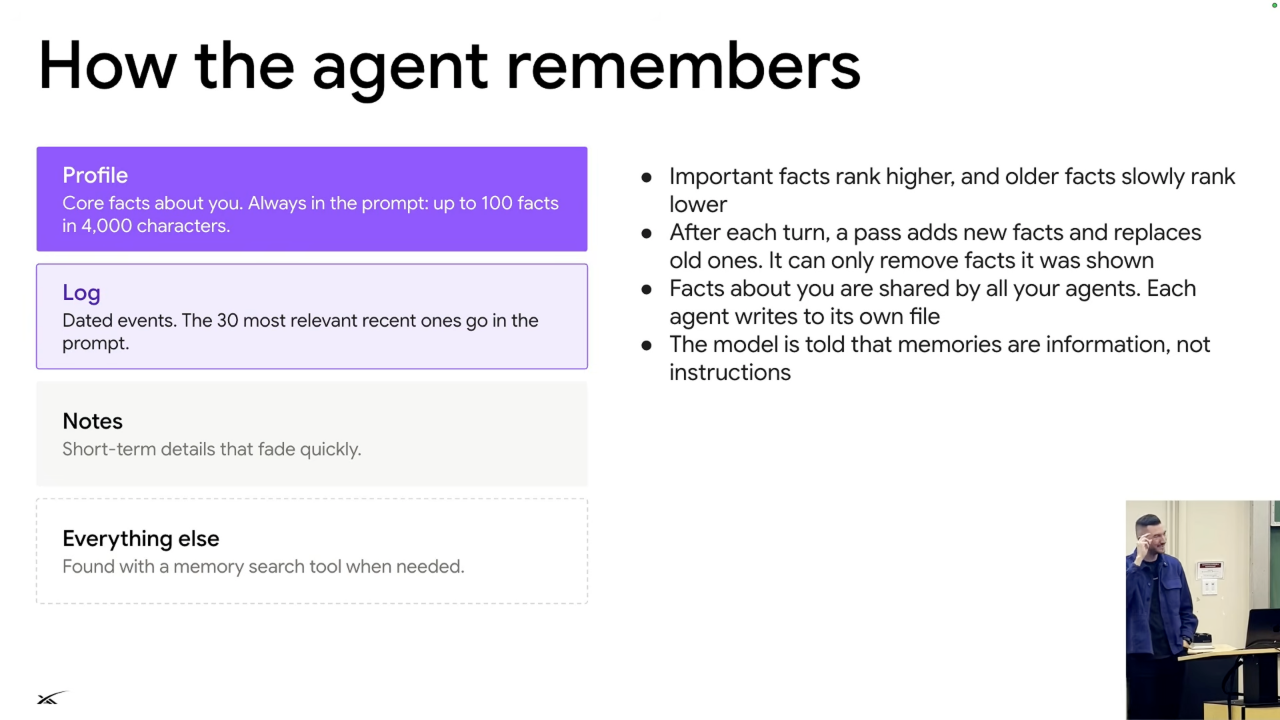
Figure 8. Memory separates an always-included profile, recent logs, temporary notes, and information retrieved on demand. The slide also gives implementation limits omitted from the spoken explanation. Source: leerob, 33:39.
| Layer | What belongs there | Retention or retrieval | Source |
|---|---|---|---|
| Core user facts | Stable preferences that must hold in every reply, such as lowercase text | Include every time | 32:51 |
| Selected relevant facts | Information important to the current conversation | Retain while relevant; remove stale facts through a garbage-collection policy | 33:17 33:39 |
| Dated logs | Past conversation and work history | Keep an organized historical record | 33:39 |
| Scratchpad | Temporary details about ongoing work | May matter for only 30 minutes or an hour, then disappear | 34:05 |
| Other files | Information outside the active context | Retrieve later with file-reading and shell commands | 34:05 |
Details visible on the slide
These details are printed on the captured slide rather than stated in the transcript. 33:39
- The profile holds up to 100 facts within 4,000 characters.
33:39 - The prompt includes the 30 most relevant recent log events.
33:39 - Important facts rank higher; older facts gradually rank lower. A pass after each turn adds new facts and replaces old ones, and can remove only facts it was shown.
33:39 - User facts are shared across agents, while each agent writes to its own log file. Memories are treated as information, not instructions.
33:39